PDRN Eye Patch Manufacturer — Custom, Private Label & OEM/ODM
Eye-care OEM/ODM factory producing hydrogel and bio-cellulose PDRN under-eye patches for brands, retailers and distributors.
Short answer
PDRN eye patches are manufactured as hydrogel or bio-cellulose patches with a polynucleotide active fraction, typically 500 units MOQ on a stock formula and 3,000 units for a custom PDRN formula. Development runs about 5 to 7 days for an existing formula and 4 to 8 weeks for a new one. Production is under GMPC and ISO 22716 requirements, with EU PPWR packaging documentation and CPNP notification support for European brands.
What PDRN actually is (and what it is not)
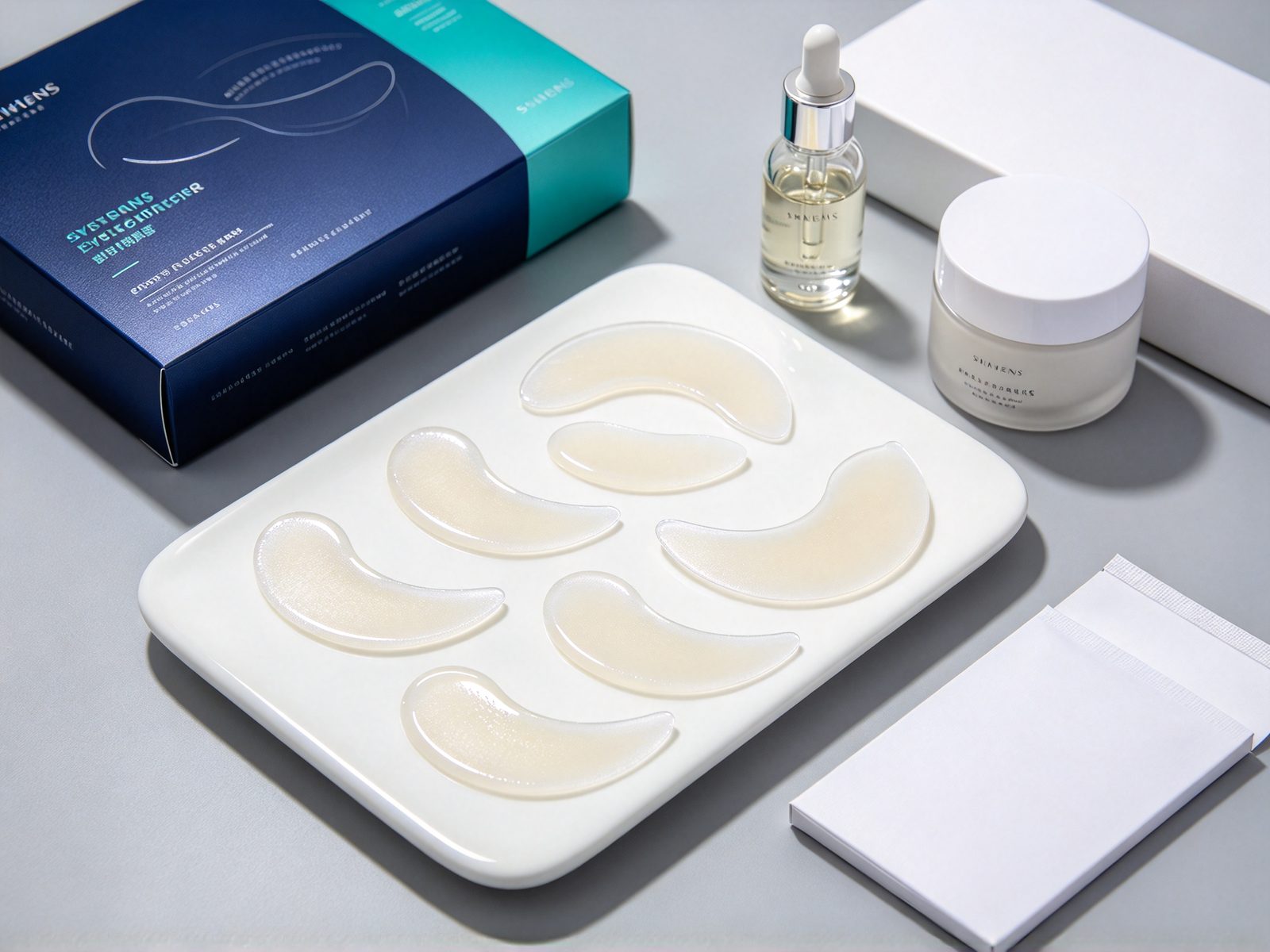
PDRN stands for polydeoxyribonucleotide: a highly purified fraction of DNA-derived nucleotides prepared from controlled-source salmon or trout milt. In Korean and Japanese formulations it became a K-beauty staple before spreading into European and North American eye-care lines, where it is usually presented alongside caffeine, niacinamide, peptides or hyaluronic acid.
The separation that matters commercially: PDRN is not collagen, and it is not simply another hyaluronic acid. It is a polynucleotide fragment researched for skin recovery after stress, microneedling or light-based treatments — which is exactly the positioning that sells well in eye-care, where consumers are looking for firmness and fatigue recovery rather than plain hydration.
For a private label buyer this means the ingredient story can be specific rather than generic. "PDRN under-eye patch" is a category claim that survives shelf scrutiny, while "deep hydration mask" competes with thousands of interchangeable SKUs.
Why PDRN is the right category to enter now
PDRN sits at the intersection of three trends that are still early in Western eye-care: recovery-after-procedure positioning, ingredient-led retail storytelling, and the shift from masks to targeted patches. The search results for PDRN eye-patch supply queries are currently dominated by B2B platform listings rather than by established brand factories, which means a supplier with real documentation is visibly absent from them.
That combination — rising ingredient interest plus thin commercial supply — is the rare case where the content gap and the supplier gap are the same gap. It is also why we recommend building the page now rather than waiting for the category to consolidate. See the 2026 ingredient trends guide for the wider map.
Format and substrate, compared
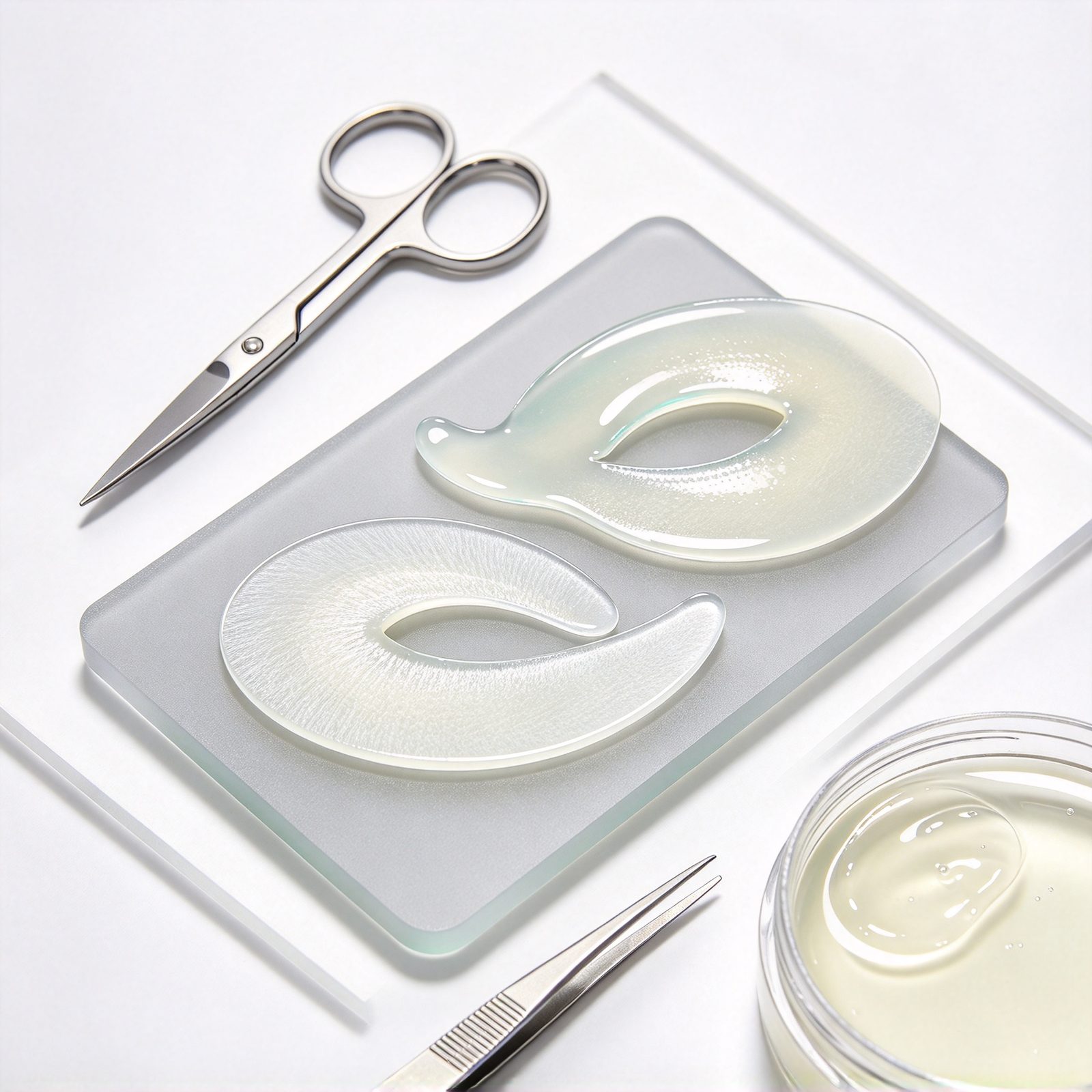
| Format | Wear time | Best for | Unit cost |
|---|---|---|---|
| Hydrogel patch | 20–40 min | Mainstream retail, any eye contour, die-cut shaping | Lowest |
| Bio-cellulose film | 20–30 min | Higher-end lines, serum-rich formulas | Mid |
| Freeze-dried (lyophilized) patch | Apply after activation | Innovation and differentiation | Highest |
If you are still deciding between formats, the cream vs serum vs patches guide explains where patches sit in a routine; for cost structure, the cost breakdown guide walks through where the money actually goes.
MOQ, lead time and what drives the number
Minimum quantities are set by the substrate, the packaging and the stability data — not by the formula alone. A stock PDRN patch can be produced in a shorter run because the formula, artwork and packaging are already qualified; a new formula needs stability testing and a new print run before it can be released.
| Order type | MOQ | Sampling | Production lead time |
|---|---|---|---|
| Private label, stock formula | 500 units / SKU | 5–7 days | 2–3 weeks |
| Custom formula, own artwork | 3,000 units | 2–4 weeks | 4–8 weeks |
| Contract manufacturing, established SKU | Negotiated | — | Booked by slot |
Note on tier figures. The two standard tiers above apply to under-eye patches quoted as a line item. If a new hydrogel formula needs dedicated line time, new die tooling or an extended stability programme, the production minimum runs higher and is quoted case by case once the specification is agreed.
Unit price drops in steps as quantity rises, because setup and changeover costs are spread across more units. Full tier logic is in the eye-care MOQ guide, and scheduling detail in the lead time guide.
How a PDRN eye patch is made
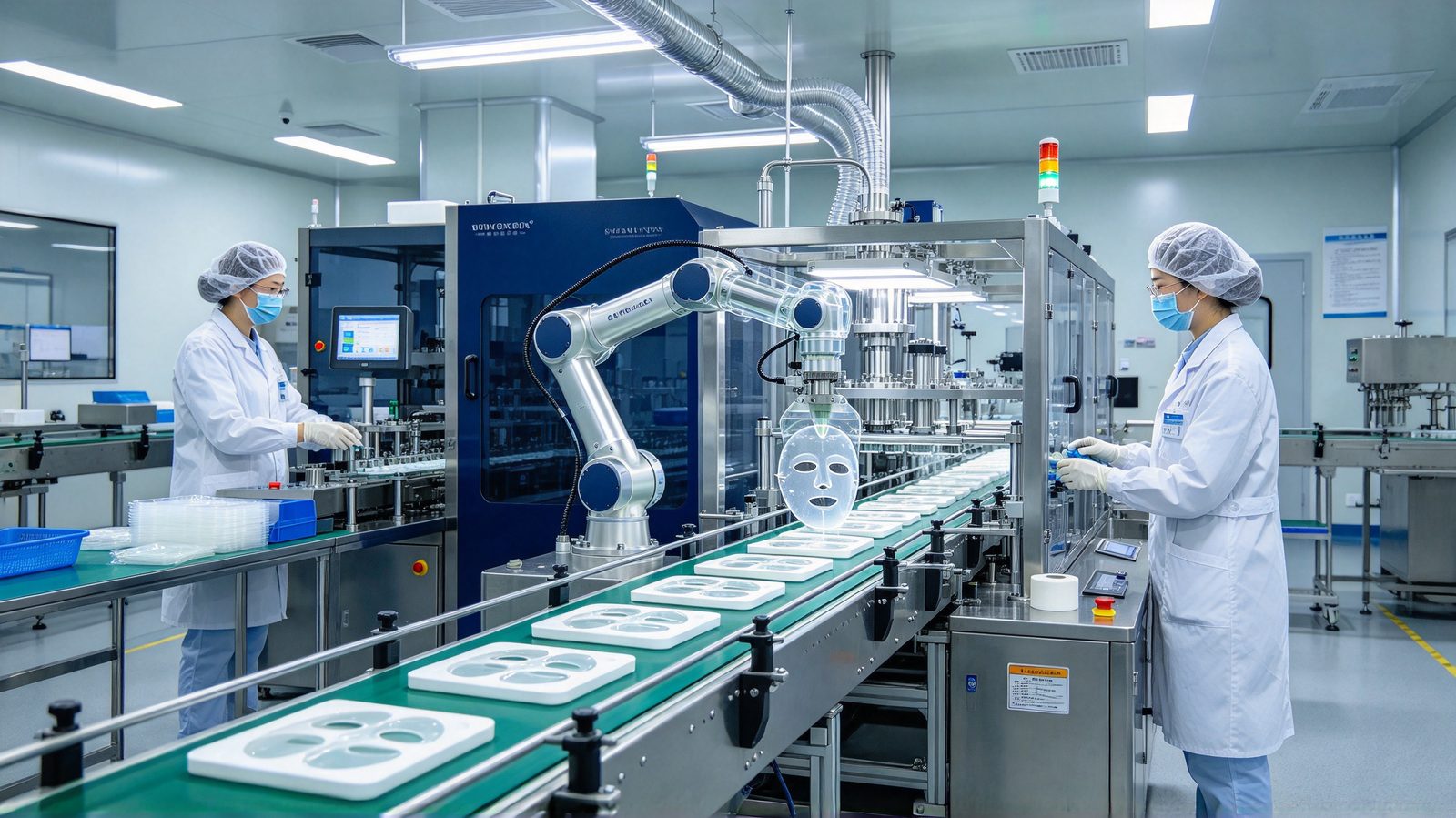
The polynucleotide active is dosed into an aqueous gel base, mixed with the supporting actives, then spread onto the substrate and die-cut to the eye contour before being sealed in sachets or trays. Every batch is filled, sealed and inspected under the factory's quality system, with retain samples kept for traceability.
Because PDRN is the differentiating claim, concentration and source are declared on the specification sheet before artwork is locked. That single document then drives both your packaging copy and your export documentation.
Certificates and EU compliance
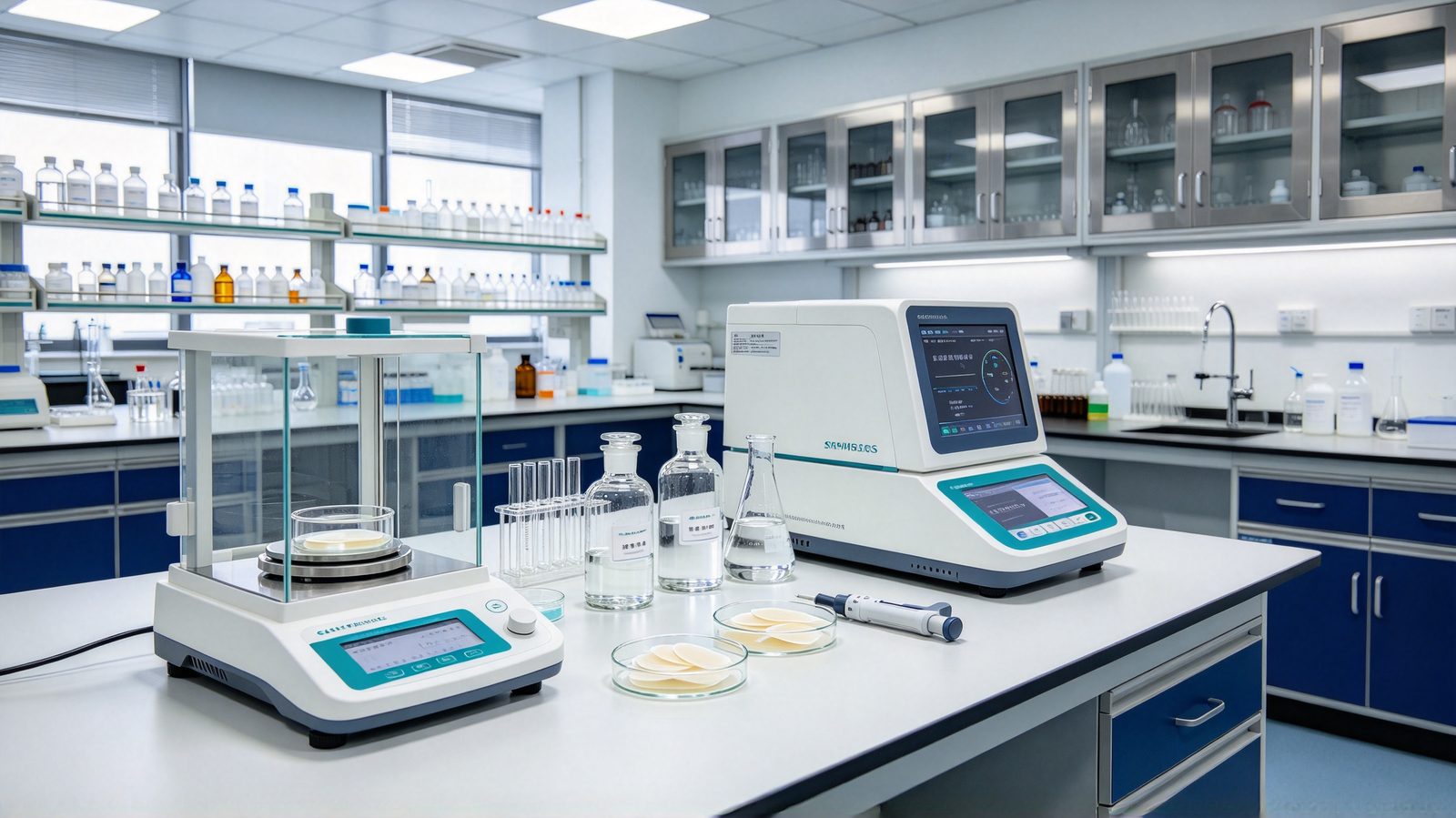
Cosmetic manufacturing is regulated, and eye-care is one of the more scrutinised categories. Our lines run under GMPC and ISO 22716 quality management, and the documentation pack for an eye patch typically covers:
- Product Information File (PIF) and Declaration of Conformity (DoC) under EC Regulation 1223/2009
- INCI declaration with the polynucleotide content stated per pack
- CPNP notification route for the EU responsible party
- PPWR (EU) 2025/40 packaging and packaging-waste requirements, including EPR registration in each sale market
- Microbiological and stability test reports, with the INCI list matching your artwork
Most competing supplier pages stop at a single ISO line. Expanding the compliance section is the cheapest trust difference available to us — EU packaging rules in particular change the buyer's own obligations, so spelling them out wins the conversation early. Details are in the PPWR & EPR guide and the CPNP vs MoCRA guide.
Private label vs custom: which route fits your brand
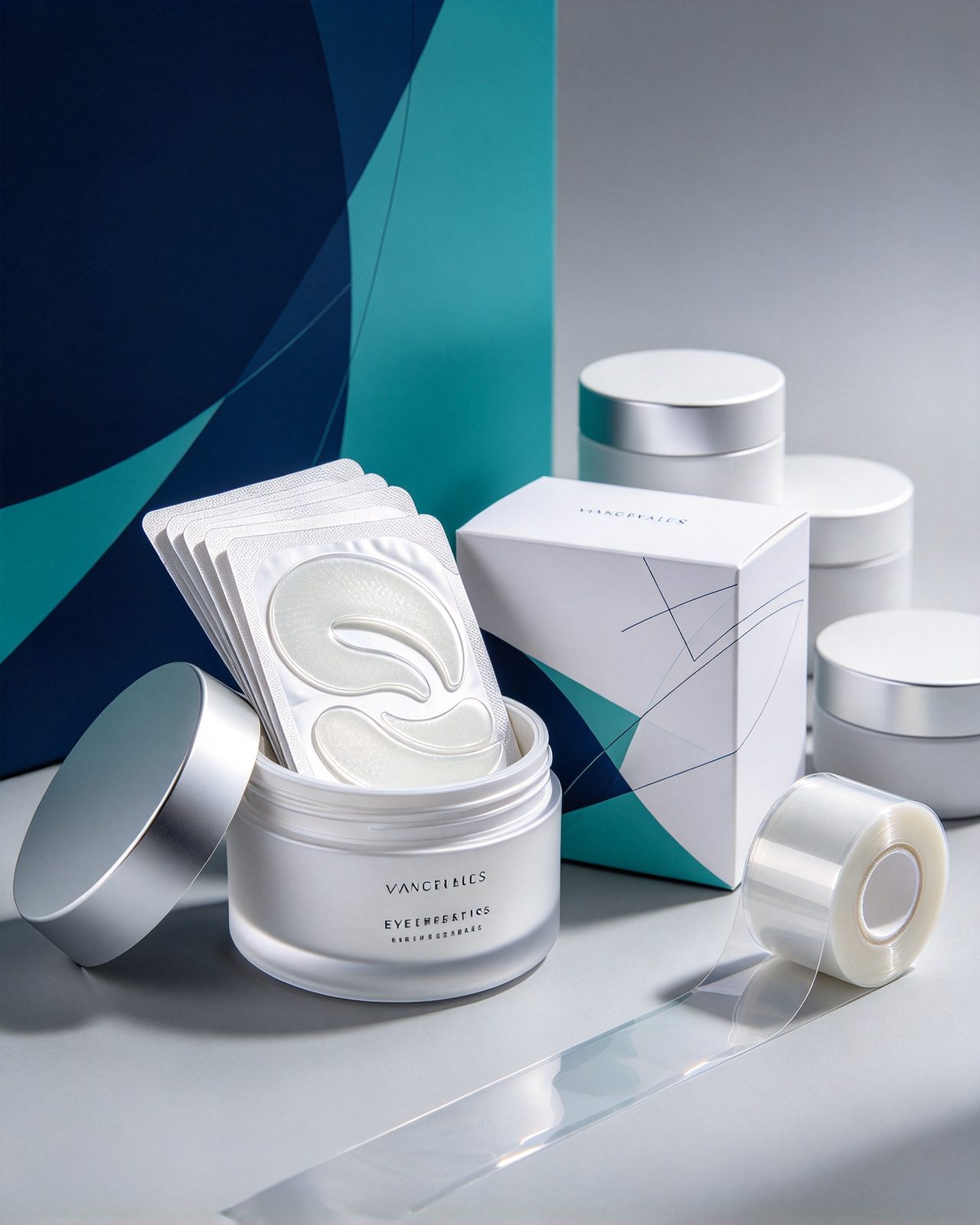
The two routes are frequently confused at the quoting stage, and the difference decides both your timeline and your unit price. Private label PDRN eye patches mean you pick an existing destabilised or stabilised formula, apply your own artwork and packaging, and go to market in weeks. The product performs exactly as the formula was developed to perform, and the ingredient story is already proven in the market.
Custom development means the formula is adjusted for you — active concentration, supporting actives, pH, scent, colour, texture — and occasionally the substrate itself is modified. This is the route that produces a genuine differentiator, and it is the route worth taking when you already know your brand position and have a retailer asking for something the market does not yet offer.
A practical rule: launch the first 500 to 1,000 units on a private label PDRN eye patch formula to validate demand and capture shelf placement, then fund a custom version once the velocity is proven. That sequencing avoids the most common error in this category — committing to a 3,000-unit custom formula for a SKU that has never sold.
Either way, the specification sheet is your contract with the factory. It fixes the polynucleotide content, the substrate, the pack configuration, the stability data and the INCI order, so that the artwork you print and the product you receive cannot drift apart.
Packaging and artwork constraints buyers miss
Eye patches are small, which makes packaging decisions disproportionately expensive. The sachet or tray format drives the die-cut shape of the patch, and the print run of that sachet has its own minimum — sometimes higher than the product MOQ itself. The practical consequence is that artwork should be finalised before the quantity is negotiated, not after.
Plan for the full set early: inner sachet, outer carton, insert or leaflet if your market requires it, and the barcode or PLU allocation. Markets differ in what they expect on-pack, so the artwork checklist should be built from the destination market rather than copied from an existing SKU.
What to send us for an accurate quote
| Field | Why it matters |
|---|---|
| Target market | Sets the compliance route (EU CPNP, UK, US MoCRA, etc.) |
| Substrate preference | Hydrogel, bio-cellulose or freeze-dried changes tooling |
| Packs per unit and sachet count | Determines unit price more than most buyers expect |
| Estimated quantity | Selects the MOQ tier and the production slot |
| Certification requirement | Retailer-specific packs may need extra tests |
PDRN eye patch manufacturer FAQ
What is a PDRN eye patch?
An under-eye patch whose formula is built around PDRN, a purified polynucleotide fraction, delivered on a hydrogel or bio-cellulose film worn for 20 to 40 minutes.
Is PDRN the same as collagen or hyaluronic acid?
No. Collagen and hyaluronic acid mainly hold water, while PDRN is a polynucleotide fragment researched for skin recovery after stress or procedures. They are usually combined rather than substituted.
What is the MOQ for PDRN eye patches private label orders?
Stock PDRN formulas start at 500 units per SKU; a newly developed formula usually requires 3,000 units. Mixed-variety packs can sometimes be structured to reach a lower effective minimum.
Which substrate should I choose, hydrogel or bio-cellulose?
Hydrogel is the mainstream, soft and easy to shape; bio-cellulose is thinner, denser and better for higher-end serum-rich formulas at a higher cost.
How long does development take?
Sampling on an existing formula takes 5 to 7 days; a custom PDRN eye patch with stability testing typically takes 4 to 8 weeks.
Which certificates do you hold?
Production follows GMPC and ISO 22716 quality requirements. EU-bound products are prepared with PPWR packaging documentation, CPNP notification route and a Declaration of Conformity for your responsible party.
Can you make PDRN patches without salmon-derived DNA?
Yes. The polynucleotide source can be declared to fit your market position, including vegan or fish-free claims where required.
How do I request a quote?
Send your target market, dosage form, active concentration, pack size, quantity and certification requirement. You get a formulation suggestion, MOQ tiers, an indicative unit price range and a market compliance checklist.
Planning a PDRN eye patch line?
Send your market, format and estimated quantity — we reply with formulation advice, MOQ tiers, compliance notes for your target market and samples within 24 hours.
Request a Quotation Request Free SamplesRelated: request a quotation · free samples · factory & certification · ingredient guide
EyeOEM · Eye-Care OEM/ODM Manufacturing · PDRN eye patch manufacturer page · sales@eyeoem.com